
Olympic Peninsula · Washington State
PORT ANGELES
Where Adventure Meets Community

At a Glance
- County: Clallam
- County Seat
- ZIPs: 98362 / 98363
- Population: ~20,000
- Median Home Value: ~$490,000–$524,000
- Median Age: ~39
- Annual Rainfall: ~25 inches
- Home appreciation over 10 years: 138%
- Ferry: MV Coho to Victoria, BC (90 min)
- Olympic National Park: 17 miles
Port Angeles doesn’t always get the introduction it deserves. Most people encounter it as a transit point — a ferry terminal, a gas stop on the way to Hurricane Ridge, the last full-service city before the wilderness begins. That framing dramatically undersells what is in fact the most economically substantive, demographically balanced, and geographically positioned community on the northern Olympic Peninsula.
The largest city on the peninsula at roughly 20,000 residents, Port Angeles is the Clallam County seat, home to a full-service regional hospital, a community college, a working deep-water port, a U.S. Coast Guard sector command, and direct ferry access to Victoria, British Columbia — one of Canada’s most beloved cities — ninety minutes across the Strait. Olympic National Park, nearly a million acres of glacier, rainforest, and wild Pacific coast, begins seventeen miles south of downtown and is accessible year-round.
What has changed in Port Angeles over the past decade is the city itself. The restaurant and craft brewery scene has matured into something genuinely good. The arts infrastructure has deepened, anchored by Field Hall and the Port Angeles Fine Arts Center, which shows work by more than 500 Northwest artists in a setting overlooking the city. The Elwha River, whose ecological restoration is one of the most significant conservation stories of the century, flows through the western edge of the city and is in the process of becoming one of the most remarkable ecological comeback narratives in the American West. And a housing market that long offered Peninsula value at a fraction of Puget Sound prices has appreciated 138% over the past decade — a track record that reflects genuine, durable demand.
For buyers seeking a real city — with infrastructure, services, employment, and culture — at the edge of one of America’s most extraordinary national parks, and at price points that remain meaningfully below Port Townsend’s or Sequim’s premium-market ranges, Port Angeles deserves a serious look.
Community History
The S’Klallam and the Naming of the Harbor
The S’Klallam people — whose name means “the Strong People” — inhabited the shores of the Strait of Juan de Fuca for millennia before European contact, living in permanent villages along the coastline and the mouths of rivers including the Elwha. Their relationship to the salmon, the strait, and the land of the northern Peninsula was the foundation of their economy and culture. That relationship was profoundly disrupted by what came next.
Spanish explorer Francisco de Eliza charted the harbor in 1791 and named it “Puerto de Nuestra Señora de los Ángeles” — Port of Our Lady of the Angels. The name was shortened over time to Port Angeles. Captain George Vancouver followed in 1792 and confirmed the harbor’s strategic value: the deep natural harbor, protected by the long arm of Ediz Hook, was among the finest anchorages on the northern Pacific Coast.
The City of Dreams — and Its Second Act
American settlement arrived in earnest through the mid-19th century, and Port Angeles became Puget Sound’s second Customs Port of Entry, after Port Townsend. President Abraham Lincoln issued an executive order reserving the Port Angeles waterfront as a federal townsite — an early recognition of its strategic and commercial importance. The city grew around timber, fishing, and port commerce. By the early 20th century, two hydroelectric dams had been built on the Elwha River to power the growing city and its timber mills.
The 20th century brought periods of significant growth — defense installations, the paper and timber economy, and the establishment of Olympic National Park in 1938, which both constrained development and anchored the region’s long-term identity as a gateway to world-class wilderness. Port Angeles became the administrative capital of the Peninsula, home to the Park Service’s Olympic headquarters, the county government, and a hospital serving the entire northern Peninsula.
The closure of mills and shifts in the timber economy brought economic transition through the 1980s and ’90s — a pattern common across the rural Pacific Northwest. What emerged over the following decades was a more diversified economy anchored by healthcare, higher education, government, maritime industry, and tourism, with a growing creative class beginning to discover a city that offers genuine quality of life at prices that still feel like the Pacific Northwest of a generation ago.
The Elwha Restoration — A Story Still Unfolding
One of the most significant environmental events in American history occurred here in the early 2010s: the removal of two hydroelectric dams on the Elwha River — the largest dam removal project in U.S. history at the time of its completion in 2014.
The Elwha Dam (108 feet) and Glines Canyon Dam (210 feet) had blocked salmon migration and flooded Lower Elwha Klallam cultural sites for nearly a century. Congress authorized their removal in 1992; demolition began in September 2011 and was completed in 2014. Behind the dams, approximately 19 million cubic meters of sediment had accumulated over a hundred years. As the dams came down, that sediment surged downstream, depositing roughly 4.6 million cubic yards of material at the river’s mouth — rebuilding beaches and estuary habitat that had not existed within living memory.
The results have been extraordinary. Salmon have returned to stretches of the Elwha they had not accessed in a century. Bull trout have been observed in the upper river for the first time in 100 years. The Lower Elwha Klallam Tribe’s cultural sites, flooded for generations, are being restored. The estuary at the river’s mouth is rebuilding itself into productive clam habitat. Scientists from around the world are studying the Elwha as a model for river restoration at scale.
For residents and buyers, the Elwha story is not just history — it is an ongoing transformation visible from the river trails, the restored estuary, and the returning wildlife. It gives Port Angeles a narrative arc that few communities of its size can claim: a city that witnessed destruction, authorized reckoning, and is watching regeneration happen in real time.
Olympic National Park — Living at the Edge of the Wild
Seventeen miles from downtown Port Angeles, Hurricane Ridge rises to nearly 5,200 feet above sea level — and on a clear day, the view from the ridge encompasses the full sweep of the Olympic Mountains in one direction and the Strait of Juan de Fuca and Vancouver Island in the other. The drive from the Port Angeles Visitor Center to the ridge takes under an hour and passes through one of the most dramatic elevation transitions in the national park system.
Olympic National Park encompasses nearly a million acres of terrain that includes three distinct ecosystems found nowhere else in such proximity: temperate rainforest (the Hoh and Quinault receive among the highest annual precipitation in the continental United States), alpine glacier and meadow, and 73 miles of wild Pacific coastline. The park was designated a UNESCO World Heritage Site and International Biosphere Reserve — one of the few places in the world to hold both designations simultaneously.
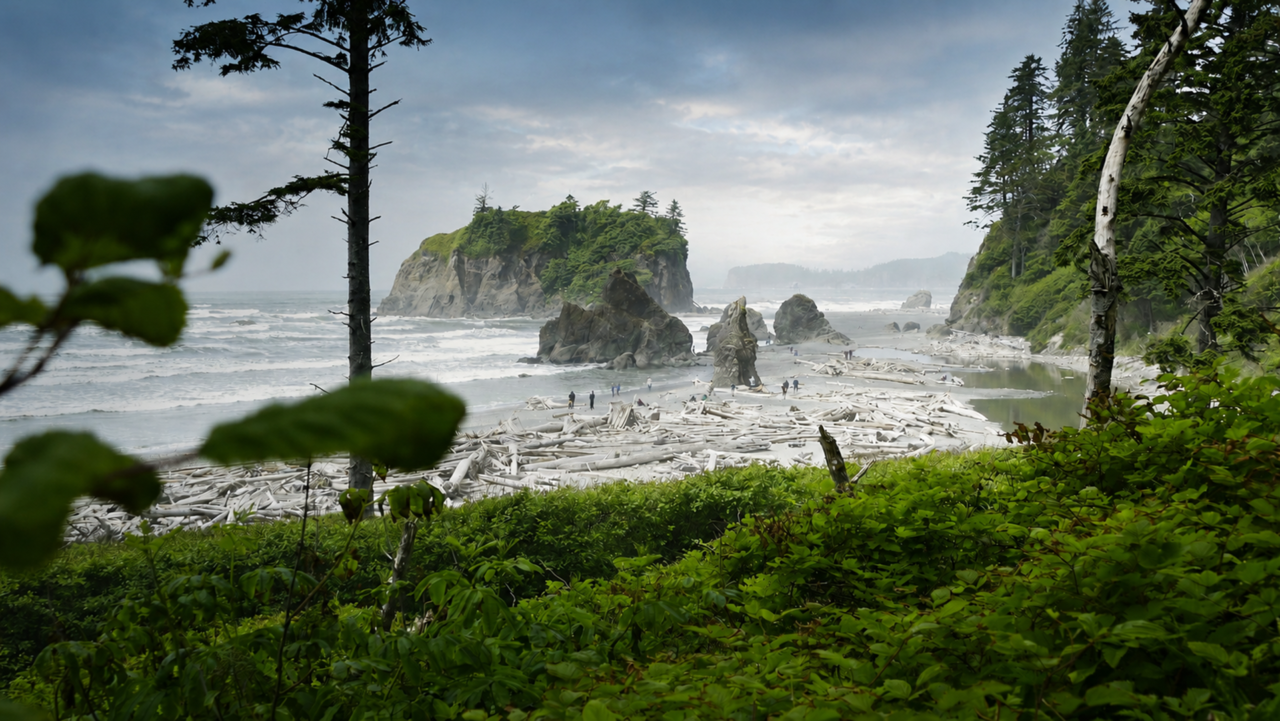
For residents of Port Angeles, this is not a destination requiring planning and travel. It is the backyard. Hurricane Ridge is a winter skiing and snowshoeing venue in season. Lake Crescent — one of the deepest and clearest lakes in Washington, a glacially carved sapphire 20 miles west on Highway 101 — is a twenty-minute drive for a kayak or a swim. The Hoh Rain Forest, Sol Duc Hot Springs, and the wild coast at Rialto Beach are day-trip distances for anyone based in Port Angeles.
Over 3.5 million tourists visit the North Olympic Peninsula annually. The city that serves as their primary gateway is Port Angeles, and the economic and lifestyle infrastructure built to serve that visitation benefits residents year-round.
Ferry Access to Victoria, BC
The MV Coho, operated by Black Ball Ferry Line, makes year-round crossings between the Port Angeles waterfront and Victoria’s Inner Harbour — a 90-minute passage across the Strait of Juan de Fuca. Victoria is one of Canada’s most gracious small cities: a British Columbia capital with walkable streets, exceptional dining, gardens, culture, and a maritime character that pairs naturally with the Olympic Peninsula’s own. For residents of Port Angeles, Victoria is a day trip as naturally as Hurricane Ridge is. Vehicle reservations sell out weeks in advance in summer; walk-on passengers have greater flexibility but reservations are still recommended in peak season.
The ferry connection is not merely a tourism amenity. It is a material aspect of the quality of life calculus for buyers considering Port Angeles — an international city accessible from your front door, 90 minutes by sea.
Neighborhoods
Port Angeles is a real city with distinct neighborhood geography, a working industrial waterfront, residential hills with significant view corridors, and rural fringe areas with acreage properties. Buyers will find more variety here than in any other single Peninsula community.
Downtown & Waterfront
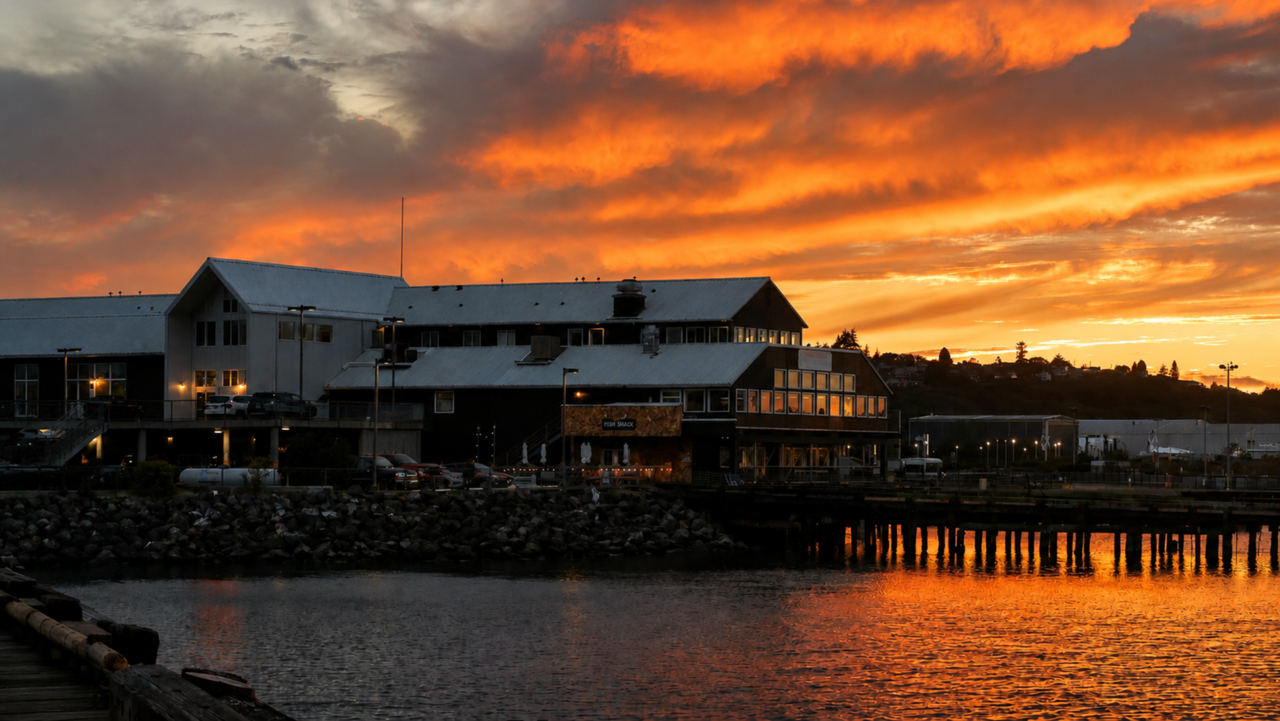
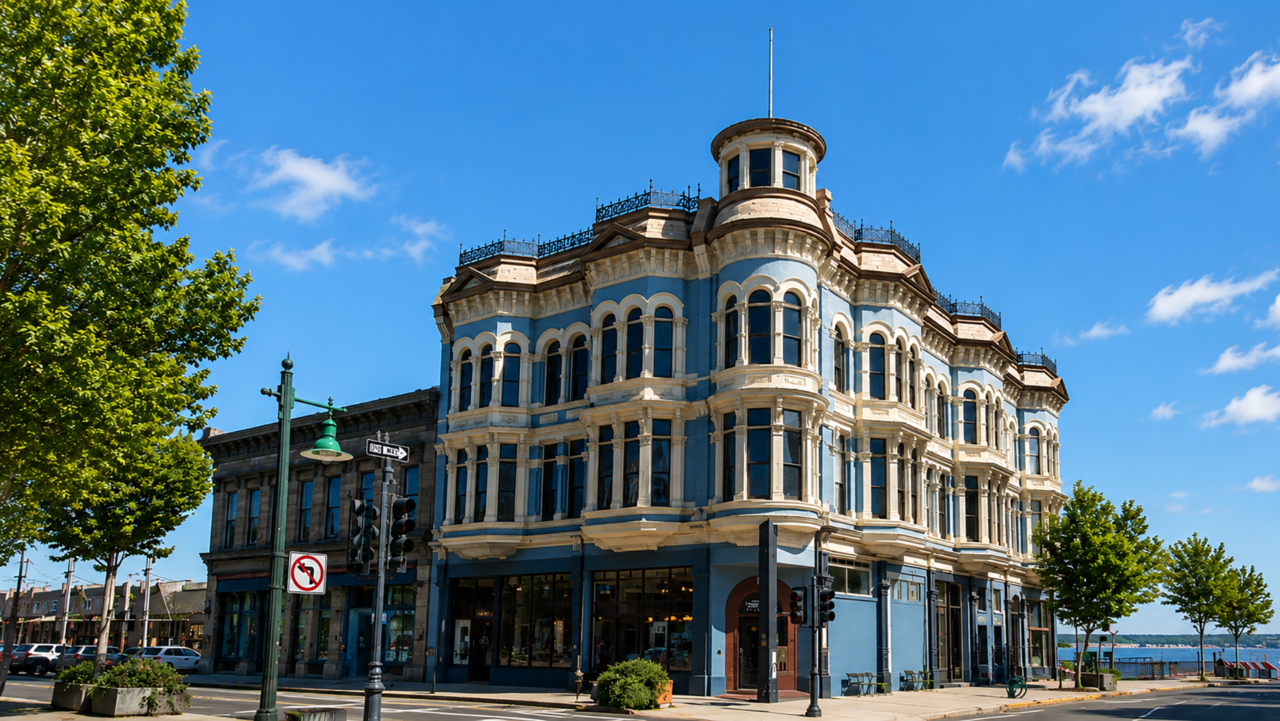
The working heart of the city — the ferry terminal, the Port of Port Angeles facilities, commercial fishing, and a downtown that has been steadily evolving over the past decade. Waterfront properties here are limited and significant: views across the Strait to Vancouver Island, proximity to the ferry terminal and harbor activity, and a distinctly urban-maritime character. The Port Angeles Underground Heritage Tour departs from downtown, exploring tunnels beneath the original city — a reminder that Port Angeles, like its Puget Sound counterparts, was built, rebuilt, and built again.
Harbor View & North Port Angeles
The elevated bench north of downtown between the city and the Strait offers some of the most compelling view real estate on the entire Peninsula. Homes here look directly north over the harbor and Ediz Hook, across the Strait to the mountains of Vancouver Island, and east toward the shipping lanes. The light here in summer evenings is remarkable. Properties range from modest midcentury homes to larger custom construction; the view premium is real but the prices remain well below comparable Puget Sound waterfront.
Ediz Hook
A natural sand spit extending three miles into the Strait from Port Angeles harbor, Ediz Hook protects the harbor and hosts the U.S. Coast Guard Air Station Port Angeles — the busiest Coast Guard air station on the West Coast. The Hook itself is largely restricted, but the approach and the views it frames define the character of the waterfront neighborhoods.
Mount Angeles & Upland Residential
The hillside neighborhoods rising south from downtown toward the base of the Olympic foothills — established residential areas with a mix of midcentury bungalows, craftsman homes, and newer construction on larger lots. These neighborhoods capture views north over the city and harbor while offering proximity to the park entrance corridor. Good value for buyers seeking space and mountain adjacency.
West Side / Elwha Corridor
The western portion of the city borders the Elwha River corridor and offers access to the restoration area, the Olympic Discovery Trail, and the quieter rural fringe of the urban area. Properties here range from in-town residential to rural acreage with river adjacency. The Elwha watershed trails and the restored estuary are accessible on foot. A neighborhood to watch as the restoration story continues to draw attention and investment.
East Port Angeles / Dry Creek
The eastern residential area of the city and the unincorporated communities extending toward Sequim. More affordable than the harbor view corridors; larger lots, newer subdivisions, and rural character increasing as you move east. Good access to Highway 101 for both directions.
Rural Fringe & Outlying Areas
The areas surrounding Port Angeles — toward Joyce to the west, along the Elwha Valley, and south toward the park boundary — offer acreage, farmsteads, and properties with dramatic mountain and strait views at prices that remain among the most accessible on the Peninsula. For buyers who want proximity to Port Angeles services while living in a genuinely rural setting, this fringe offers compelling value.
Property Price Ranges
| Property Type | Price Range |
|---|---|
| In-town bungalows & starter homes | $320,000 – $480,000 |
| Midcentury & craftsman residential | $400,000 – $600,000 |
| Hillside homes with partial views | $450,000 – $750,000 |
| Harbor view & Strait view homes | $550,000 – $1.2 million |
| True waterfront & high-bank Strait | $700,000 – $2.0 million+ |
| Rural acreage & outlying parcels | $350,000 – $900,000 |
| Vacant lots & build-ready parcels | $100,000 – $400,000 |
Median sale price ~$490,000–$524,000 (late 2025/mid-2026). Average waterfront listing ~$790,000. Port Angeles offers the most accessible entry-level market of the four northern Peninsula communities profiled here. All values should be independently verified. Contact Jane for a current comparative market analysis.
Lifestyle
Who Lives Here
Port Ludlow is a community of choice — which means it attracts a remarkably specific type of resident. The median age is 65, and the community is strongly retirement-oriented. Over 53% of adult residents hold four-year college degrees or higher; per capita income ranks Port Ludlow in the top 20 of all 522 ranked communities in Washington State. More than 26% of the workforce works from home — a figure that predates the remote work era and reflects a professional class that planned ahead.
Residents describe a “village feel” with a genuine social fabric: an active art league, community theater, over 100 resident clubs, the Yacht Club, the golf club, and a calendar of events that fills year-round. The community is close-knit in the way that resort communities often are — people chose to be here rather than ending up here, and that shared intentionality shapes the social atmosphere.
Climate
Port Ludlow benefits from the same Olympic rain shadow that makes Sequim famous, receiving roughly 29 inches of annual precipitation — 40% less than Seattle and considerably less than the wet side of the Peninsula. Average July highs reach the mid-70s°F. January lows hover in the low-to-mid 30s°F. Summers are long, clear, and genuinely warm. Winters are mild by Pacific Northwest standards.
Outdoor Recreation
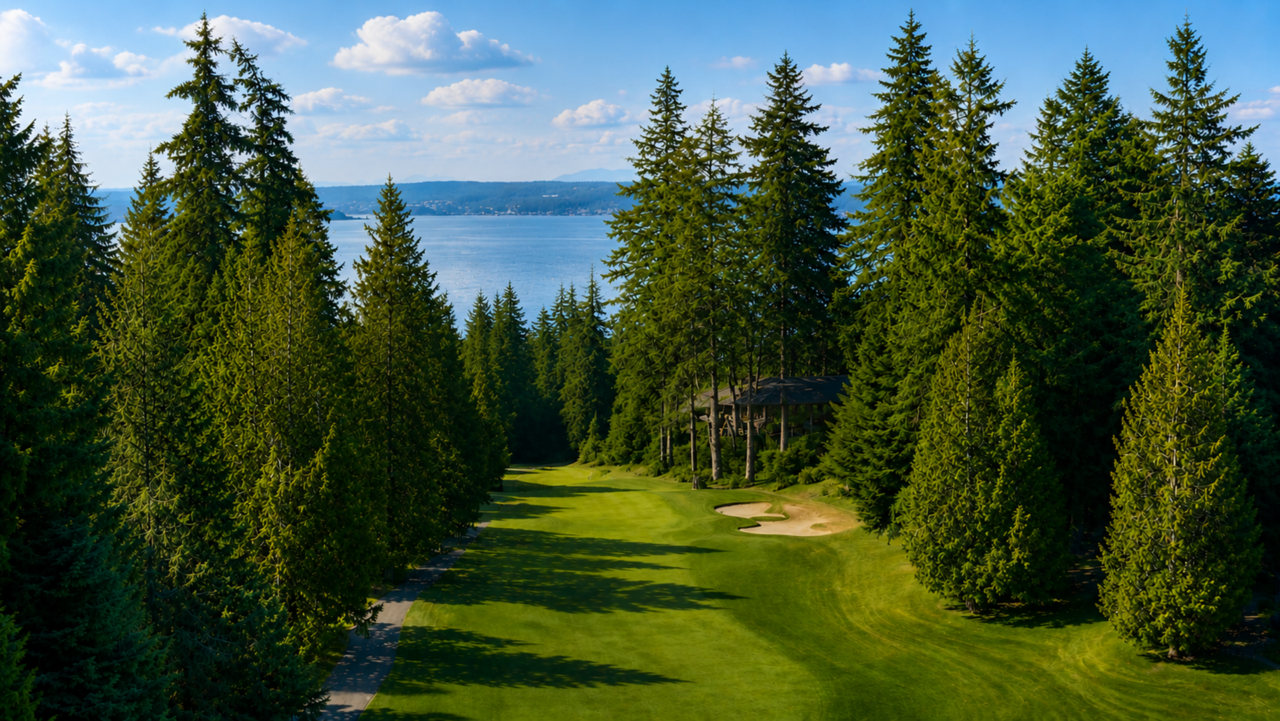
The outdoor proposition here is as complete as anywhere on the Peninsula: boating and sailing on the bay and Hood Canal; kayaking and paddleboarding from the marina or private beach; fishing (salmon, halibut, lingcod); shellfish harvesting on tidal beaches; hiking and mountain biking on 30+ miles of maintained trails; championship golf; and proximity to Olympic National Park for backcountry access. The water is visible from virtually every neighborhood — the relationship between land and sea here is intimate and constant.
Getting Around
Port Ludlow is accessed via State Route 19 and State Route 104 (which crosses the Hood Canal Bridge). Seattle is approximately 90 minutes under normal conditions. The Bainbridge Island ferry from Kingston or the Edmonds-Kingston crossing offer alternative routes for commuters and travelers. Port Townsend is 13 miles north — a straight shot up the peninsula and a frequently visited neighbor for arts, dining, and weekend errands.
The Economy — More Diverse Than It Looks
Port Angeles is the economic capital of the northern Olympic Peninsula, and its employer base is broader and more resilient than the communities around it.
The Port Angeles city and Clallam County administrations, along with Peninsula College and Olympic Medical Center, are the top three employers. The U.S. Coast Guard Sector Puget Sound Air Station — the busiest on the West Coast — is a significant federal presence. Olympic National Park employs hundreds of seasonal and permanent staff. The Port of Port Angeles manages deep-water commercial shipping, log export, and marine industrial facilities. Commercial fishing, maritime trades, retail, hospitality, and a growing cohort of remote workers round out the base.
Tourism on the Olympic Peninsula generated over $1 billion in visitor spending in 2023, supporting 7,100 direct jobs and generating $84 million in state and local tax revenues. Port Angeles, as the primary gateway, captures a significant share of that economic activity.
The transition away from timber and industrial manufacturing has not been without difficulty — the city’s 2025 Housing Action Plan candidly acknowledges the legacy of lower-wage tourism jobs and the housing affordability pressures that follow. But the employment diversification of the past two decades has built a more stable foundation, and the growth of healthcare, education, and federal employment has provided wage anchors that pure tourism economies lack.
Arts, Culture & Food
Port Angeles has evolved meaningfully as a cultural destination over the past decade, and buyers who have not visited recently may be working from an outdated impression.
Field Hall has emerged as the anchor of the city’s arts infrastructure — a venue and community hub that has elevated the quality and consistency of cultural programming. Paired with the Port Angeles Fine Arts Center, set in a wooded park with views over the city and harbor and featuring rotating exhibitions from more than 500 Northwest artists, the city has developed a genuine arts identity.
The Dungeness Crab & Seafood Festival, held each October in Port Angeles, draws visitors from across the region for what is widely considered the best celebration of Dungeness crab on the Peninsula — a fitting gathering given that the waters of the Strait immediately north of the city are among the most productive crabbing grounds in Washington State.
The restaurant and brewery scene has earned genuine regional recognition. Craft breweries, farm-to-table dining, and seafood-focused restaurants have given the downtown dining scene a quality that surprises visitors who last encountered the city a decade ago. The Saturday Farmers Market, the historic waterfront, and the Olympic Discovery Trail through the city core create a walkable civic life that is more developed than any other Peninsula community outside Port Townsend.
Peninsula College, a two-year institution serving the northern Peninsula, provides a year-round educational and cultural presence — lectures, performances, and community programming — that enriches the city’s intellectual life and contributes to its younger median age compared to the retirement-skewed communities of Sequim and Port Ludlow.
Lifestyle
Who Lives Here
Port Angeles is the most demographically balanced community on the northern Olympic Peninsula — a genuine city with a median age of roughly 39, a working population across multiple sectors, families, students, outdoor enthusiasts, artists, retirees, and a growing cohort of remote workers drawn by price points that remain well below Puget Sound comparables.
The community has a working-class authenticity that is one of its most appealing qualities for buyers who have grown tired of manicured resort towns. The waterfront smells like brine and diesel as much as lavender. The mountains are not a backdrop — they are the wall at the end of every south-facing street. The ferry horn is part of the ambient soundtrack. These are features, not deficits.
Climate
Port Angeles receives approximately 25 inches of annual rainfall — sitting at the eastern edge of the rain shadow, drier than Seattle’s 38 inches but wetter than Sequim’s 16. Summers are genuinely warm and clear. The mountain wall to the south creates dramatic weather effects, with clouds building over the peaks while the waterfront stays clear. The Strait generates consistent marine breezes and some of the finest small-boat sailing on the Pacific Northwest coast.
Getting Around
Highway 101 is the primary corridor — east to Sequim (18 miles), Port Townsend (32 miles via 101 and State Route 20), and ultimately the Hood Canal Bridge to Seattle (roughly 90 minutes to two hours). West on 101 leads to Lake Crescent, Sol Duc, Forks, and the Pacific coast. William R. Fairchild International Airport (CLM) provides general aviation access; commercial service connects through Seattle-Tacoma.
Healthcare
Olympic Medical Center is the primary acute care hospital serving the entire northern Olympic Peninsula — a full-service facility in Port Angeles with emergency, surgical, intensive care, imaging, and specialty services. OMC operates the Sequim campus for primary and outpatient care and is among the largest employers in Clallam County.
Peninsula College’s nursing and allied health programs contribute to a healthcare workforce pipeline that keeps the regional system staffed. For buyers whose healthcare access is a primary consideration in location decisions, Port Angeles’s position as the regional medical hub is a significant advantage over more remote Peninsula communities.
Schools
Port Angeles is served by the Port Townsend and Port Angeles unified systems under Clallam County. The Port Angeles School District operates a complete PreK–12 system with multiple elementary schools, a middle school, and Port Angeles High School. Peninsula College provides two-year degree, vocational, and continuing education programs locally. Private school options are limited compared to the Puget Sound urban core; buyers with school-age children should review specific campus ratings and programming as part of their due diligence.
What Buyers Should Know
The Value Proposition Is Real — and Narrowing Port Angeles has long been the most affordable of the four northern Peninsula communities, and that remains true: median prices here run roughly $100,000–$150,000 below Sequim and $150,000–$200,000 below Port Townsend. But the 138% appreciation over the past decade signals a market that has already been discovered. Buyers who waited for Sequim or Port Townsend prices to make sense often wish they had acted sooner; the same dynamic may be playing out in Port Angeles now.
Housing Supply Constraints Port Angeles is geographically bounded in a way that limits development: the Strait of Juan de Fuca to the north, the Olympic Mountains and National Park to the south, and major waterways constraining east-west expansion. The city’s 2025 Housing Action Plan formally acknowledged these constraints and the affordability challenges they create. For buyers, this supply limitation is a long-term price support — but it also means that well-priced properties in desirable locations move faster than the 81-day median suggests.
Working Waterfront Character Port Angeles is not a resort town. The working port, the paper mill smell that occasionally drifts from industrial operations to the west, the Coast Guard and commercial fishing presence, the diesel and kelp of a genuine working waterfront — these are authentic, and they are not for everyone. Buyers should visit at different times of day and in different weather before committing. For the right buyer, this authenticity is a profound attraction. For others, Sequim or Port Ludlow may be a better fit.
Elwha Corridor Properties Properties adjacent to the Elwha River restoration area involve considerations that are evolving. The river is actively rerouting itself as sediment from behind the removed dams redistributes. Riverbank conditions along the Elwha are described by the National Park Service as “continually changing” and “actively eroding.” Buyers considering properties with river adjacency should obtain current flood zone and erosion risk disclosure and review NPS restoration project status before purchase.
The Ferry as Lifestyle Asset The Black Ball Ferry connection to Victoria is among the most compelling quality-of-life features of Port Angeles that does not appear in typical real estate descriptions. For buyers who value international access, cultural richness, and the particular pleasure of a 90-minute sea crossing to one of the most livable cities in North America — this is a genuine differentiator. Vehicle reservations are required well in advance in summer; factor this into any travel planning as a new resident.
Market Snapshot
Port Angeles is the highest-transaction-volume market of the four northern Peninsula communities — 145 homes sold in November 2025 alone, compared to Port Townsend’s approximately 270 annually — reflecting a broader, more liquid buyer pool and a price point accessible to a wider range of purchasers. The median sale price held near $490,000 through late 2025, with homes averaging 81 days on market.
Over the past decade, Port Angeles real estate appreciated 138% — essentially matching Sequim’s trajectory and substantially outpacing national averages. The appreciation since 2000 stands at 272%, reflecting a long arc of growing recognition that is still underway. For buyers seeking value relative to comparable Pacific Northwest coastal markets, Port Angeles remains the most compelling entry point on the northern Peninsula.