
Olympic Peninsula · Washington State
OLYMPIC PENINSULA
WILD BEAUTY · ENDLESS ADVENTURE · ROOTED IN NATURE

At a Glance
- Size: ~3,600 square miles
- Population: ~251,500 (full peninsula)
- Bounded by: Strait of Juan de Fuca (north) · Pacific Ocean (west) · Hood Canal (east)
- Highest Point: Mount Olympus, 7,980 ft
- Annual visitors to Olympic National Park: 3.5 million+
- UNESCO World Heritage Site & International Biosphere Reserve Eight federally recognized tribal nations call the Peninsula home
There is a moment, crossing the Hood Canal Bridge westbound from the Kitsap Peninsula, when the Olympic Mountains appear at the end of the road — close enough to feel immediate, high enough to carry snow in August, and wild enough that their upper ridges have never been developed, logged, or built upon. For most people making that drive for the first time, the moment produces a specific kind of silence.
The Olympic Peninsula is, geographically, a large arm of land in western Washington — roughly 3,600 square miles of mountains, forest, river valley, and coastline suspended between the Strait of Juan de Fuca to the north, the Pacific Ocean to the west, and Hood Canal to the east. But the geography alone does not account for what people feel when they arrive. The feeling comes from scale, from wildness, and from the recognition that this landscape has been protected — by its remoteness, by the establishment of Olympic National Park in 1938, and by the active stewardship of the tribal nations who have lived here for ten thousand years — from the kind of development that has transformed most of coastal America.
Nearly a million acres of the Peninsula’s core is Olympic National Park, a UNESCO World Heritage Site and International Biosphere Reserve. The park encompasses three ecosystems that do not exist in this combination anywhere else on earth: temperate rainforest on the windward western slopes, alpine glacier and meadow at the summits, and 73 miles of wild Pacific coastline. Twenty-nine species of mammals, birds, amphibians, and fish are found nowhere else on earth, the result of thousands of years of geographic isolation producing unique evolutionary lineages. The Olympic marmot. The snow mole. The Mazama pocket gopher. The Olympic chipmunk. These are not found anywhere else.
Living on the northern Olympic Peninsula is not a compromise version of living somewhere more convenient. It is a choice — usually a deliberate one, made after research, after a visit, after standing at the edge of the Strait on a clear evening and watching the light die over Vancouver Island. People who live here will tell you there is no version of this elsewhere. They are correct.
The Shape of the North Peninsula
This page focuses on the northern arc of the Olympic Peninsula — the stretch from the Hood Canal Bridge in the east, running westward along the Strait of Juan de Fuca through Port Ludlow, Port Townsend, Discovery Bay, Sequim, the Dungeness Valley, Port Angeles, and the communities beyond — the geography Jane Carhart knows best and where her practice is concentrated.
The north Peninsula is shaped by a fundamental geological fact: the Olympic Mountains create a rain shadow as prevailing Pacific weather systems push against the range from the southwest and west. The result is a band of disproportionate sun along the northeastern shore of the Peninsula — the “blue hole” visible in satellite weather imagery, centered over Sequim and Port Angeles, where annual rainfall drops to 16–25 inches while the western slopes of the same mountain range receive over 200 inches per year. This climate anomaly is the defining fact of north Peninsula real estate: here, at the edge of one of the wettest landscapes in the contiguous United States, it is genuinely, reliably sunny.
To the east, where the Peninsula meets Hood Canal and then the Kitsap, the character shifts again — the eastern shore communities of Port Ludlow and Port Gamble occupy a more sheltered, maritime zone where the waters of the canal create a calm, protected boating environment unlike anything on the exposed Strait. The Hood Canal Bridge connects this eastern fringe to the rest of the Puget Sound world with a degree of accessibility that the more remote western Peninsula does not share.
The Land — Five Distinct Worlds
The Olympic Mountains
The 7,980-foot summit of Mount Olympus rises at the center of the peninsula and dominates every southern view from the north shore communities. The Olympic Mountains are among the most geologically complex ranges in the Pacific Northwest — formed by the accretion of seafloor material scraped off the subducting Juan de Fuca Plate over millions of years, and still rising. The range intercepts incoming Pacific moisture with unusual efficiency, creating the extreme precipitation differential between west and east faces. Above treeline, the mountains carry permanent glaciers — the Blue Glacier on Mount Olympus is among the most studied glacial bodies in North America. Hurricane Ridge, accessible by road from Port Angeles, provides year-round access to the high country: wildflower meadows in summer, cross-country skiing in winter, and 360-degree views encompassing the full mountain arc and the Strait beyond.
The Temperate Rainforest
On the windward western slopes of the Olympics, where the Hoh, Queets, and Quinault rivers drain toward the Pacific, the precipitation produces the Hoh Rain Forest — one of only a handful of temperate rainforests on earth, and the largest in the contiguous United States. Sitka spruce and western red cedar grow to extraordinary dimensions. The forest floor is carpeted in oxalis and sword fern. Bigleaf maple trees carry such weight of hanging mosses that their branches bow toward the ground. The silence is absolute except for running water. The Hoh is two hours southwest of Port Angeles on Highway 101 — a day trip for north Peninsula residents, a destination for the world.
The Strait of Juan de Fuca
The Strait is the defining waterway of the north Peninsula — 96 miles long, 13 to 18 miles wide, connecting the Pacific Ocean to Puget Sound and separating Washington State from British Columbia. For residents of the north Peninsula communities, the Strait is the constant northern view: the blue expanse, the passing container ships and tankers, the British Columbia mountains beyond, and the ferry wake tracking toward Victoria. Orca and humpback whales migrate through the Strait seasonally. Harbor seals haul out on the Dungeness Spit and the rocky shores around Protection Island. The waters support one of the most productive Dungeness crab fisheries in Washington State. The Strait is not background — it is foreground.
The Rivers
The Olympic Peninsula is drained by a dozen significant rivers, each descending from the central mountains through distinct valley corridors to saltwater. On the north side, the Elwha (subject of the most significant dam removal in American history), the Dungeness (the river whose 1896 irrigation made the lavender valley possible), the Sequim, and the Lyre define the landscape between the mountain front and the Strait. River properties on the Peninsula range from modest cabin retreats to significant acreage estates with private stretches of salmon water. The return of salmon to the Elwha following dam removal is one of the most watched ecological events in contemporary conservation — and it is happening in a river that runs to the sea through the western edge of Port Angeles.
The Eastern Shore & Hood Canal
The eastern face of the Peninsula borders Hood Canal — a long, fjord-like arm of Puget Sound running roughly north-south along the base of the Olympic Mountains. Hood Canal is famous for its clarity, its oysters and clams, and the shellfish harvesting rights that attach to some properties on its shores. Communities on the northern and eastern edges of the Peninsula — Port Ludlow, Port Gamble, Quilcene, Brinnon — have the character of the protected canal rather than the exposed Strait: calmer, warmer water, more forested shorelines, and a deep-green maritime atmosphere. For buyers who want waterfront access and relative calm over the dramatic open exposure of the north shore, the Hood Canal corridor offers compelling alternatives.
The First Peoples
The Olympic Peninsula has been inhabited continuously for more than 10,000 years. Eight federally recognized tribal nations have their homelands here, each with their own distinct history, territory, language, and sovereignty. On the northern Peninsula specifically, the S’Klallam people — whose name means “the Strong People” — inhabited the entire northern arc, from the Hoko River in the west to Puget Sound in the east, in approximately 33 village sites along the Strait of Juan de Fuca.
The three federally recognized S’Klallam bands each have a presence that buyers and residents of the north Peninsula encounter as an active, living reality:
The Jamestown S’Klallam Tribe, based at Blyn on the south shore of Sequim Bay, is among the most economically successful tribal nations in Washington State. Their 10,000-year connection to the Dungeness Valley is matched by a contemporary presence that includes a casino and hotel, a golf course, tribal health services, and extensive shellfish and natural resource management across the northern Peninsula. The Tribe purchased their own land in 1874 — one of the first tribes in the United States to do so without federal assistance — and received formal federal recognition in 1981.
The Lower Elwha Klallam Tribe, based west of Port Angeles in the Elwha River Valley, holds a reservation of approximately 1,000 acres on and near the river. Their ancestral territory centered on the sheltered bay at what is now Port Angeles — historically known as č̕ixʷícən (Tse-whit-zen), a major Klallam village. The Tribe’s decades-long campaign for the removal of the Elwha dams, which had flooded their cultural sites and blocked their salmon for a century, resulted in the largest dam removal in U.S. history (completed 2014) and a river restoration now recognized internationally as a model for ecological recovery. Legislation introduced in 2025 proposes transferring approximately 1,082 acres of former Olympic National Park land to the Tribe in trust — a continuation of a land restoration process with direct implications for the western edge of Port Angeles.
The Port Gamble S’Klallam Tribe, based on the eastern shore of the Peninsula at Port Gamble Bay, maintains sovereign territory and treaty-protected fishing and shellfish rights throughout the region.
Buyers purchasing anywhere on the northern Olympic Peninsula are purchasing land within the traditional territories of these nations. Their presence — as employers, as resource managers, as cultural anchors, and as active participants in the land’s future — is not historical context. It is the present tense.
Olympic National Park — The Protected Core
The Park is the reason the Peninsula looks the way it does. Established in 1938 under President Franklin D. Roosevelt — who enlarged the protected area against the objections of the timber industry — Olympic National Park now encompasses 922,650 acres. It was designated a UNESCO World Heritage Site in 1981 and an International Biosphere Reserve in 1976, two of the highest international environmental designations available. It is one of very few sites in the world to hold both simultaneously.
The Park’s acreage is divided into three geographically separated sections: the main mountain and forest core, a coastal strip running along 73 miles of wild Pacific shoreline, and smaller inland parcels. The non-contiguous structure of the park — with private land and Highway 101 threading between sections — is unusual and materially relevant to real estate: properties “surrounded by” or “adjacent to” Olympic National Park may, in practice, border park land on one or more sides, offering effective buffering from future development that is a genuine long-term value asset.
For north Peninsula residents, the park is most directly accessed via the Hurricane Ridge Road from Port Angeles (the only paved road into the high country on the north side), via the Elwha Valley corridor west of Port Angeles, via the Sol Duc Hot Springs Road off Highway 101 west of Port Angeles, and via the Lake Crescent shoreline where Highway 101 hugs the glacially carved lake for several miles. Each of these access corridors represents a distinct recreational world.
The Northern Corridor — Communities & Character
Highway 101 is the spine of the northern Olympic Peninsula, running eastward from Forks through Port Angeles, along the south shore of the Strait past Sequim, and bending south toward Discovery Bay and the junction with State Route 20 toward Port Townsend. This corridor is the connective tissue of the communities Jane serves, and its specific geography defines the real estate character of each sub-area.
Port Ludlow & the Eastern Shore
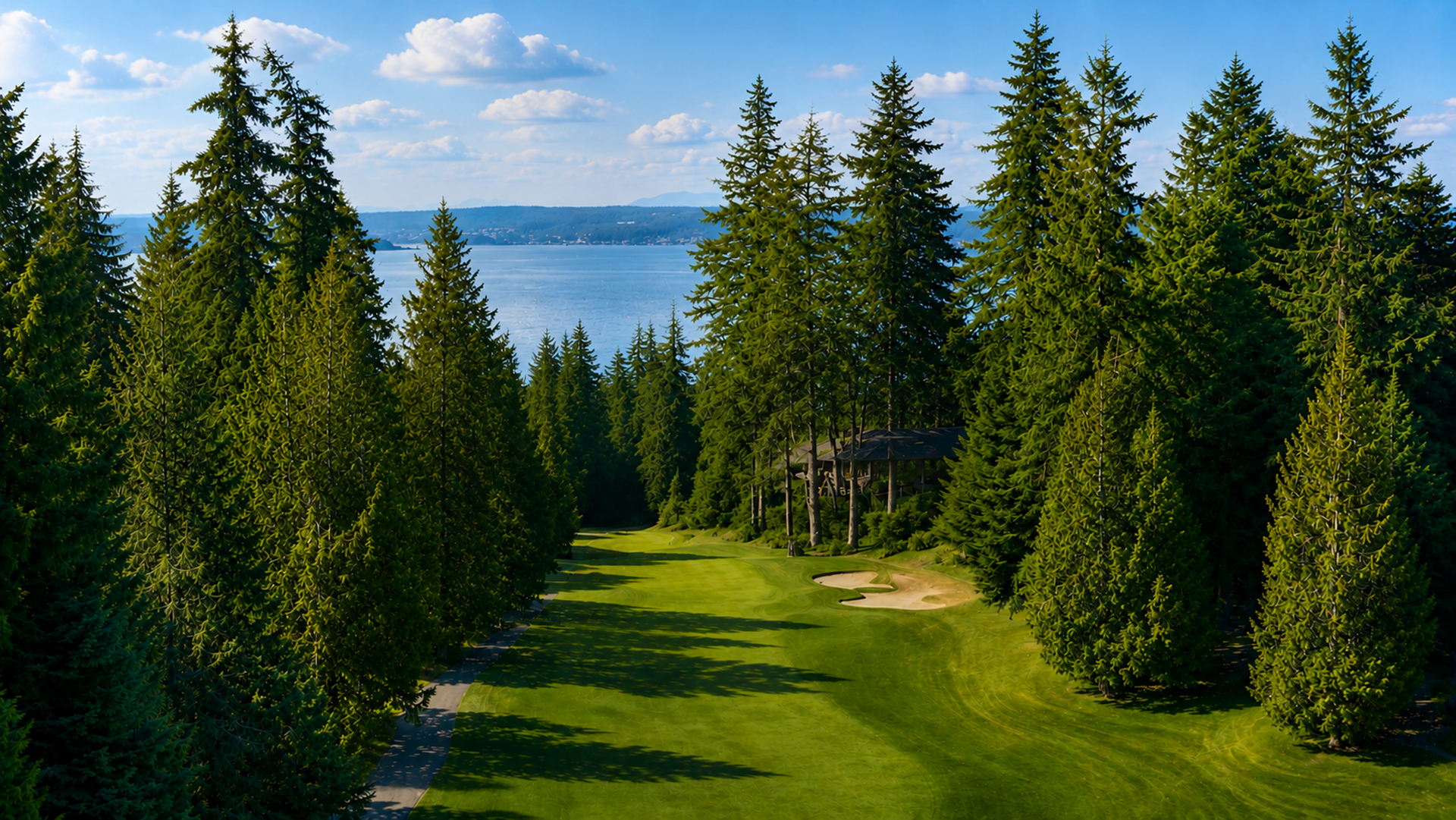
The Hood Canal Bridge approach communities — Port Ludlow, Port Gamble, and the unincorporated communities along the northern Hood Canal — have the character of the protected canal rather than the open Strait. Port Ludlow in particular, Washington’s original master-planned resort community, occupies a position between the canal waters and the forest that feels separate from the rest of the Peninsula in the best possible way. [See the full Port Ludlow community page.]
Discovery Bay & Gardiner
The transitional zone between the Kitsap/Port Townsend corridor and the Sequim basin — largely rural, with properties overlooking Discovery Bay from wooded lots and modest agricultural parcels. Discovery Bay was identified as an undetected bay by late 18th-century explorers because its mouth is concealed by overlapping natural sandbars; this sheltered geography made it historically significant and gives present-day waterfront properties a calm, protected character.
The Dungeness Valley
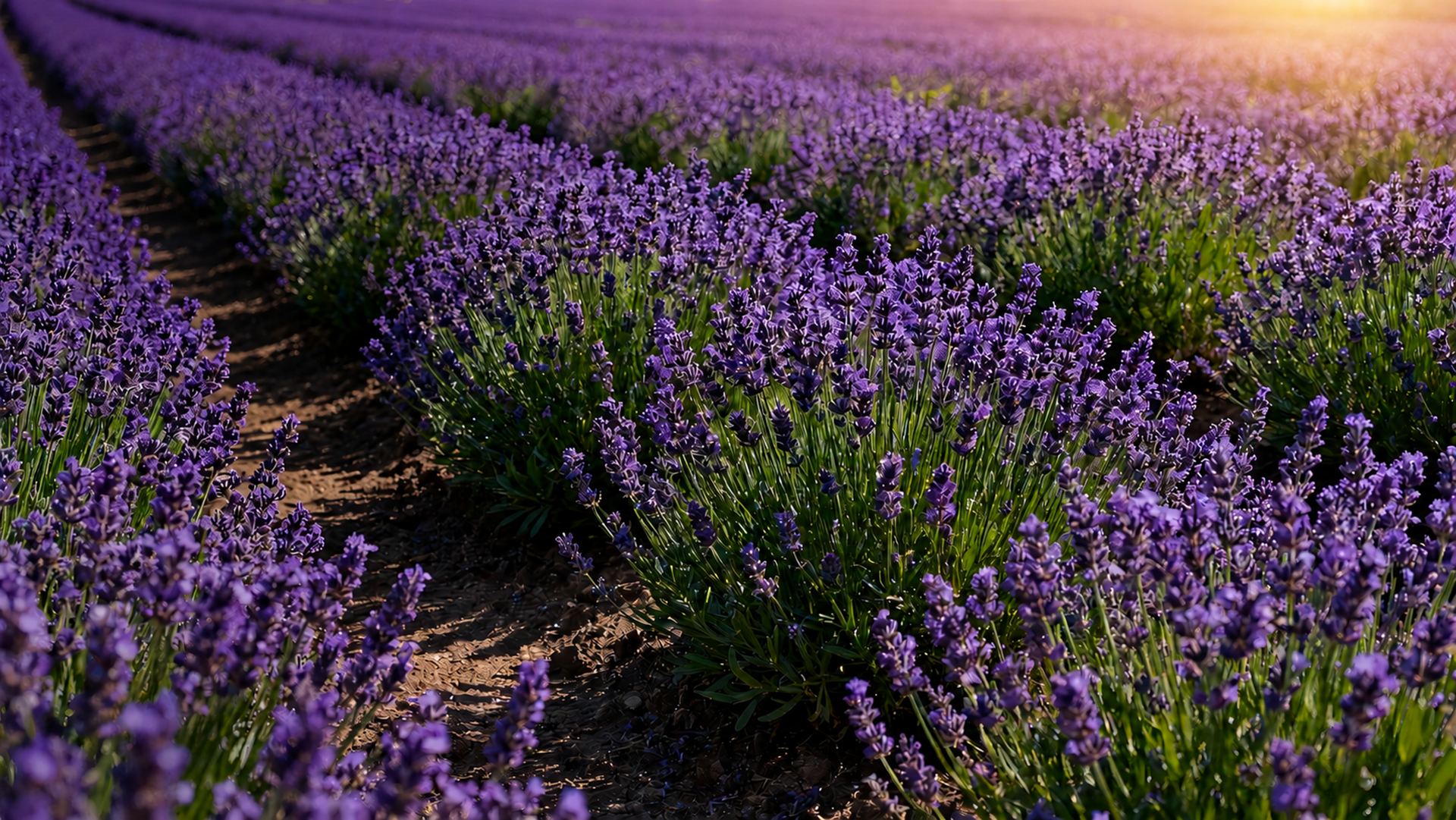
The agricultural heart of the north Peninsula, running south from the Strait toward the Olympic foothills — lavender farms, horse properties, hobby farmsteads, and equestrian estates amid open farmland that has been tended since the 1896 irrigation ditches were dug. The Dungeness River runs through it. Protection Island sits offshore, visible from north-facing properties, as a National Wildlife Refuge protecting one of the largest nesting colonies of marine birds in the contiguous United States. [See the full Sequim community page.]
Sequim Bay to Blyn
Highway 101 skirts the south shore of Sequim Bay between the city and the Jamestown S’Klallam Tribe’s Blyn community — a stretch where waterfront properties with bay views and tidal beach access appear at intervals between forested stretches. Sequim Bay State Park’s forested marine camping area occupies a stretch of the eastern shore, providing a permanent open-space buffer. The John Wayne Marina at the north end of the bay serves the boating community.
Port Angeles & the Elwha Corridor
The largest city on the Peninsula, the regional healthcare and government hub, and the gateway to Hurricane Ridge and the Park’s high country. West of downtown, the Elwha River corridor is undergoing active ecological restoration following the removal of two dams — a story still unfolding that has transformed the river, the estuary, and the western edge of the city. [See the full Port Angeles community page.]
Freshwater Bay & the West of Port Angeles
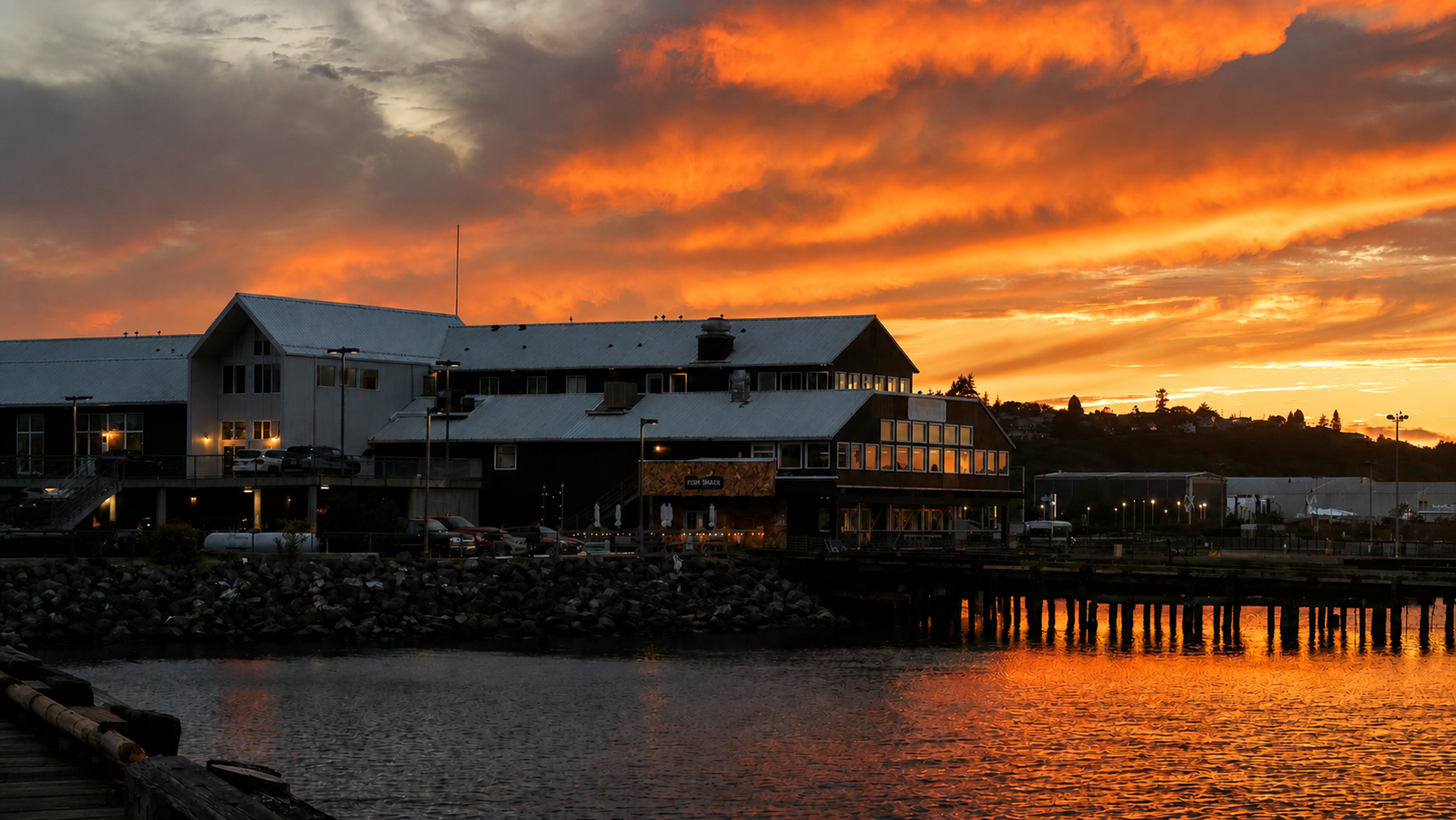
The stretch of Highway 112 westward from Port Angeles toward Neah Bay traces the north shore of the Peninsula along the Strait — a corridor of smaller communities, rural waterfront, and eventually the Makah Nation’s territory at Cape Flattery, the northwesternmost point in the contiguous United States. Freshwater Bay, Joyce, and the communities along the Strait west of Port Angeles offer some of the most dramatic and most affordable north-shore waterfront on the Peninsula, with dramatic views across the Strait toward Vancouver Island and limited development pressure.
Climate Across the North Peninsula
The rain shadow effect creates meaningful climate variation across relatively short distances on the north Peninsula — variation that buyers should understand as a material factor in quality of life and property enjoyment.
| Location | Avg. Annual Rainfall | Character |
|---|---|---|
| Sequim / Dungeness Valley | ~16 inches | Olympic rain shadow core — driest western Washington |
| Port Angeles | ~25 inches | East edge of rain shadow — drier than Seattle |
| Port Townsend | ~29 inches | Partial rain shadow benefit |
| Port Ludlow | ~35–40 inches | Beginning of western Washington typical range |
| Forks (western Peninsula) | ~120 inches | Full Pacific exposure, temperate rainforest climate |
Summer temperatures across the north corridor average in the low-to-mid 70s°F with low humidity. Winters are mild — snow is rare and does not persist at sea level, though Hurricane Ridge typically opens for skiing by December. The combination of mild temperatures, moderate precipitation, and a mountain wall that creates spectacular cloud and light effects makes the north Peninsula one of the most visually dramatic environments in the contiguous United States — year-round.
The Real Estate Landscape — A Buyer’s Orientation
Buying on the northern Olympic Peninsula requires understanding a real estate market that does not behave like any other market in Washington State. Several principles are worth establishing clearly:
Land is Effectively Finite
The north Peninsula is bounded — by water, by mountains, by national park and national forest land, and by tribal territories. There is no equivalent “next county over” where growth can spill. This geographic enclosure creates long-term supply constraints that underpin consistent appreciation: both Sequim (134% over 10 years) and Port Angeles (138% over 10 years) have delivered appreciation trajectories well above national averages precisely because new supply is structurally limited. This is not a bubble dynamic — it is a geography dynamic.
There Are Multiple Distinct Markets Within “The Peninsula”
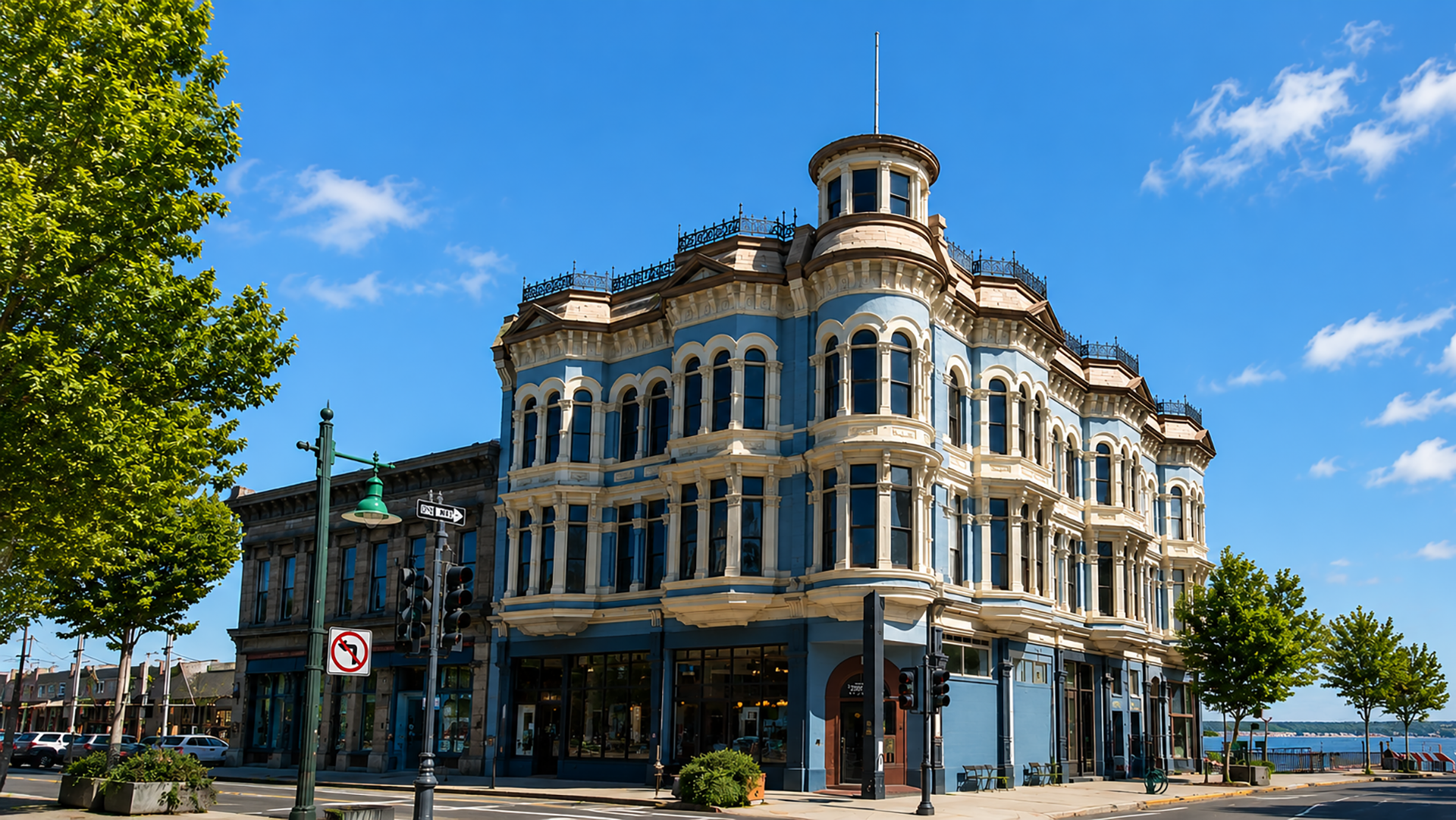
The communities along the north corridor are each their own market with their own pricing dynamics, buyer pools, and liquidity characteristics. Port Townsend trades on architectural pedigree and arts identity. Port Ludlow trades on resort amenity. Sequim trades on climate and agricultural character. Port Angeles trades on urban infrastructure and Park proximity. A property “on the Olympic Peninsula” can mean anything from a $320,000 in-town bungalow in Port Angeles to a $4 million+ private waterfront estate on the Strait. Buyers who approach the region as a single market will be poorly served.
Waterfront Is a Spectrum, Not a Category
“Waterfront” on the north Peninsula encompasses ocean/Strait-front properties on the open water (high wind exposure, dramatic views, significant value premium); Hood Canal waterfront (calm, protected, with shellfish harvesting potential); bay and harbor waterfront (Sequim Bay, Discovery Bay, Port Ludlow Bay — protected with marine access); and river-front properties. Each category has different exposure, different value drivers, and different due diligence requirements. Tidelands ownership — the submerged land below the mean high tide line — may or may not convey with upland ownership and requires specific disclosure review.
Acreage Properties Require Special Diligence
The north Peninsula has significant inventory of rural acreage — farmsteads, timber lots, hobby farms, mountain-view properties, and riverfront parcels outside any city limits. These properties operate under county zoning (Clallam County west of Sequim; Jefferson County for Port Townsend, Port Ludlow, and Diamond Point), which varies materially from city codes. Well and septic are standard in rural areas; buyers should obtain full well water testing and septic inspection as a condition of any rural purchase. Washington State water rights on properties with river or stream adjacency require specific legal review.
Tribal Land & Treaty Rights
Treaty rights held by the Peninsula’s tribal nations — including fishing and shellfish harvesting rights established in the Point No Point Treaty of 1855 — are active, federally protected, and not subject to negotiation by individual property owners. Buyers purchasing waterfront property with tidal beaches should understand that tribal treaty harvest rights may apply on public tidelands even adjacent to private property. This is not a burden unique to the Peninsula, but it is more directly relevant here than in many Washington markets given the density and activity of tribal fishery management on the Strait and Hood Canal.
The Infrastructure Reality
The Peninsula is genuinely rural. Broadband access, while improving, varies significantly by location — the difference between a fiber-connected community like Port Ludlow or downtown Sequim and an acreage parcel five miles from Highway 101 can be the difference between viable remote work and a fundamental limitation on daily life. Buyers with remote work requirements should verify specific connectivity at any rural property before purchase. Cell coverage similarly varies; some areas of the north corridor have dependable service while others do not.
Wildlife
The ecological richness of the Olympic Peninsula is unlike anything else in the Pacific Northwest, and for many buyers it is a primary motivation. Living here means living with wildlife in a way that is qualitatively different from suburban or even rural Pacific Northwest settings.
Marine mammals: Orca (both resident and transient populations), humpback whale, gray whale, minke, harbor porpoise, Dall’s porpoise, and harbor seal are regular presences in the Strait of Juan de Fuca. Sea lion haul-outs occur seasonally. Protection Island, visible from north-facing properties in the Sequim area, protects the largest nesting colony of rhinoceros auklets in the contiguous United States.
Terrestrial mammals: Roosevelt elk — the largest elk subspecies in the world — are endemic to the Olympic Peninsula and present throughout the region, including in the Dungeness Valley and the river corridors. Black bear and mountain lion are present in the Olympic foothills and lower park elevations. Black-tailed deer are ubiquitous at every elevation. The Olympic marmot, Olympic chipmunk, and snow mole are found nowhere else on earth.
Raptors & birds: Bald eagles are year-round residents throughout the north corridor. Peregrine falcons nest on the coastal bluffs. Over 250 bird species have been recorded at the Dungeness National Wildlife Refuge alone, including multiple threatened and endangered species. The north Peninsula lies along a major Pacific Flyway migration corridor, producing spectacular fall and spring shorebird concentrations.
For buyers who value direct, daily contact with a functioning ecosystem — not a managed version of one — the Olympic Peninsula offers something that cannot be replicated.
Getting to the Peninsula
The north Olympic Peninsula is accessible from Seattle via two primary routes:
Highway 104 via the Hood Canal Bridge — the most direct road route for most travelers, running from the Kingston ferry landing or the Highway 104 junction south of Kingston across the Hood Canal Bridge (which occasionally closes in high winds) to Port Ludlow, Discovery Bay, and Highway 101. Seattle to Sequim: approximately 90 minutes under normal conditions.
Washington State Ferries — multiple routes serve the Peninsula with varying convenience depending on origin point. The Seattle-Bainbridge Island crossing (35 minutes) connects to Highway 305 and Highway 104 to the Hood Canal Bridge. The Edmonds-Kingston crossing (30 minutes) offers a faster option for travelers coming from north Seattle or Snohomish County. The Mukilteo-Clinton crossing to Whidbey Island provides alternative access via the Keystone-Port Townsend ferry (30 minutes) for buyers approaching from the north.
The Black Ball Ferry from Port Angeles to Victoria, BC (90 minutes) — not a Seattle route, but a significant connectivity asset for Peninsula residents.
William R. Fairchild International Airport in Port Angeles provides general aviation access. Commercial service requires a connection through Seattle-Tacoma. Kenmore Air and similar float plane operators provide seaplane service between Seattle and several Peninsula points.
Where to Begin
If you are coming to the north Peninsula for the first time to evaluate it as a place to live, Jane recommends this sequence:
- Drive the full north corridor — Hood Canal Bridge to Port Townsend, then west on Highway 101 through Sequim to Port Angeles. You will pass through every distinct character zone in one day.
- Spend time in at least two of the four featured communities — they are different enough that your reaction to each will tell you something important about what you actually want.
- Drive Highway 112 west of Port Angeles toward Freshwater Bay and Joyce — to see what the Strait looks like from a less-developed stretch.
- Go to Hurricane Ridge — the 17-mile drive from Port Angeles is mandatory for any serious buyer. The view from the ridge tells you everything about what makes this Peninsula extraordinary.
- Take the Victoria ferry — even if only for the crossing and back. Understanding that Victoria, BC is 90 minutes from your potential front door is a quality-of-life fact that belongs in your calculus.
Then call Jane.
Why the Peninsula — What Buyers Are Really Deciding
Every buyer who comes to the Olympic Peninsula with genuine intent is deciding the same thing: whether the extraordinary quality of a particular kind of life is worth a particular kind of distance. The distance from Seattle, from a major airport, from the density of cultural and commercial infrastructure that defines urban Pacific Northwest living. The distance is real — not as an obstacle, but as the very mechanism that produces the thing being purchased.
The Peninsula is extraordinary precisely because it is not convenient. The rain shadow is dramatic because the mountains are enormous. The wildlife is abundant because the wilderness is intact. The communities are genuine because the distance has selected for people who chose to be there. The real estate has appreciated because what is being offered cannot be replicated elsewhere at any price.
The buyers Jane works with on the north Peninsula tend to share a particular clarity of purpose: they know what they’re leaving behind, they know what they’re moving toward, and they have done the kind of thinking about lifestyle and values that produces lasting satisfaction with a major decision. That clarity — combined with deep local expertise and the global marketing platform of Realogics Sotheby’s International Realty — is what makes every transaction here something more than a transaction.