
Olympic Peninsula · Washington State
PORT TOWNSEND
Historic · Creative · Coastal

At a Glance
- County: Jefferson
- ZIP: 98368
- Population: ~10,650
- Median Home Value: ~$651,000
- Homeownership Rate: ~62%
- Median Age: ~50
- Two National Historic Landmark Districts
- Designated Washington State Creative District (2020)
There are very few places in America where you can walk a downtown that looks almost exactly as it did in 1890, watch tall ships pass through a working harbor, attend a world-class music festival on a forested military campus, and be home in time for dinner at a chef-owned restaurant sourcing ingredients from the farm down the road. Port Townsend is one of those places.
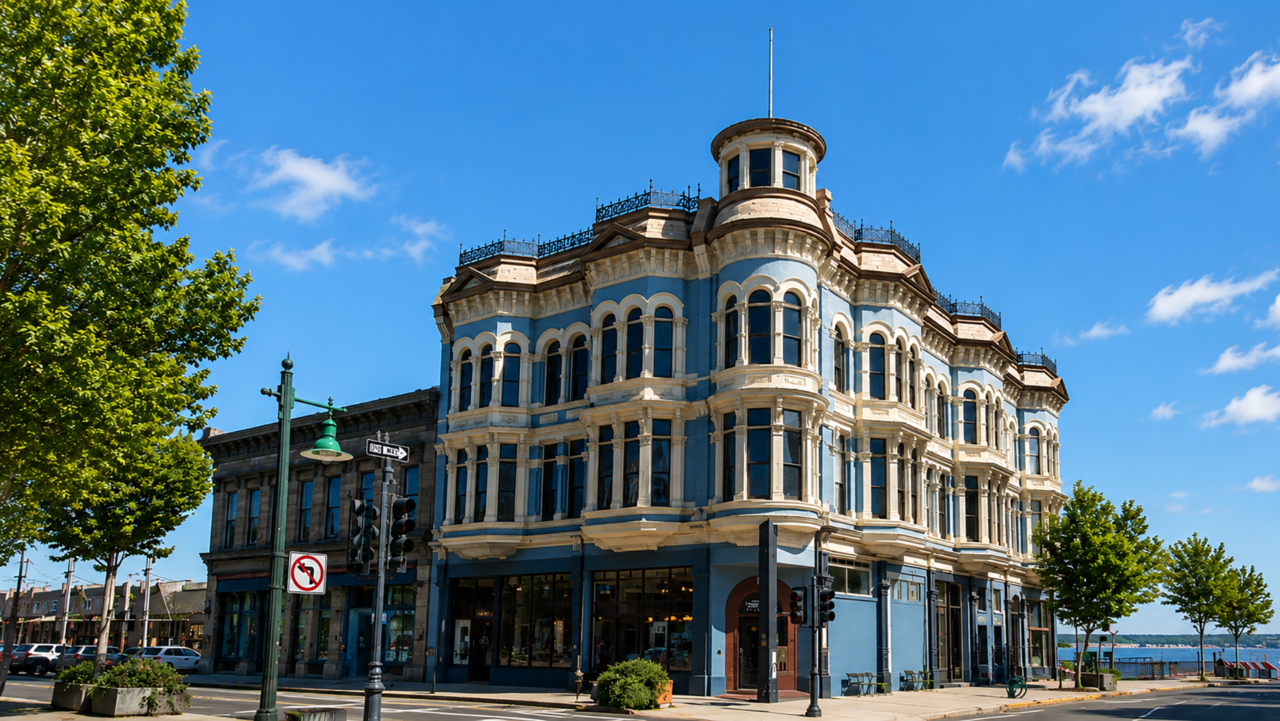
Perched at the northeastern tip of the Olympic Peninsula where the Strait of Juan de Fuca meets Admiralty Inlet, Port Townsend is Washington’s most architecturally distinguished town — and one of only three Victorian seaports in the United States listed on the National Register of Historic Places. Its streets are lined with ornate 19th-century commercial buildings and painted-lady mansions that were frozen in time by a railroad that never came, preserved by neglect for nearly a century, and rediscovered in the 1970s by artists, craftspeople, and seekers of a particular kind of beauty.
What’s extraordinary about Port Townsend is how completely it has channeled that history into a living, functioning identity. This isn’t a heritage town coasting on nostalgia. It has more artists, designers, and media workers than 90% of communities in America. Its economy is genuinely diverse — maritime trades, paper manufacturing, arts, tourism, local government, and a fast-growing cohort of remote workers who chose Port Townsend deliberately and don’t regret it. And its calendar of cultural events — music festivals, film festivals, boat festivals, art walks — sustains a year-round cultural life that punches far above its population of ten thousand.
For real estate buyers, Port Townsend offers something that is genuinely rare on the Peninsula: a walkable town with a real downtown, architectural pedigree, a working waterfront, and a community identity that attracts a highly educated, creatively engaged population. The market here is different from Port Ludlow’s resort character or Sequim’s retirement-community feel. Port Townsend is a town — with all the vibrancy, texture, and real-world diversity that implies.
The City of Dreams
Port Townsend’s history is among the most dramatic of any Washington community — a story of spectacular ambition, devastating collapse, and ultimately, accidental preservation.
The site was first named in 1792 by British Royal Navy Captain George Vancouver, who charted the harbor and christened it “Port Townshend” in honor of his friend the Marquess of Townshend. The simplified spelling — Port Townsend — came later. The Klallam Tribe, who had inhabited the area for thousands of years, knew it as a significant gathering place long before Vancouver arrived.
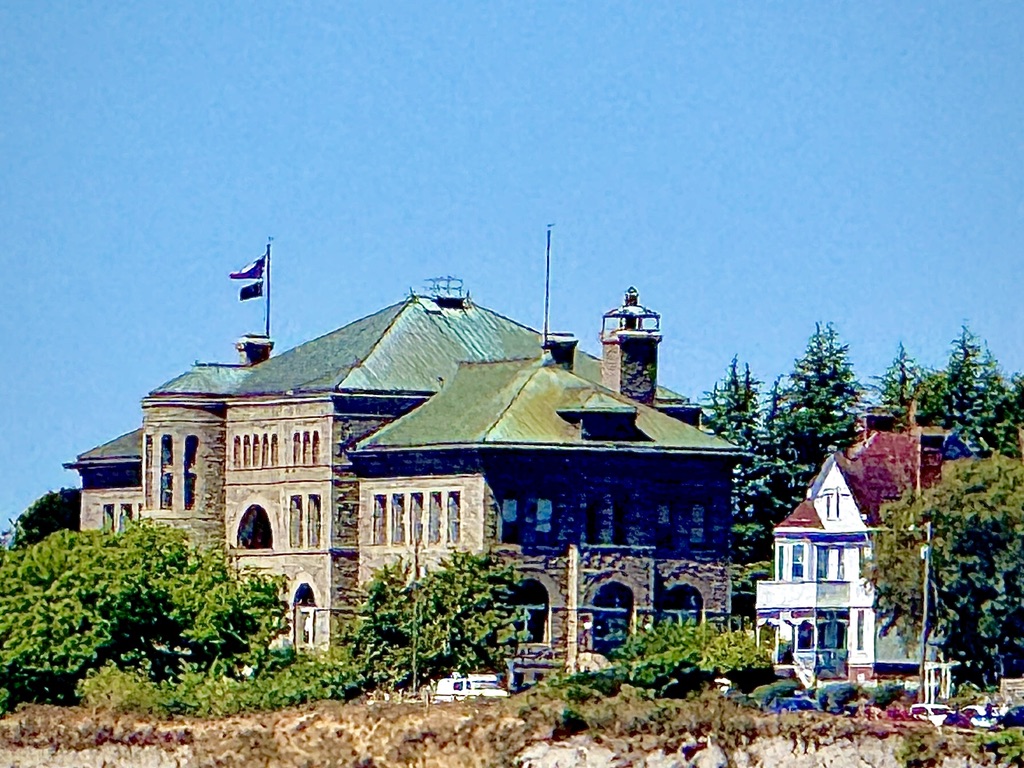
American settlement began in 1851, and within a decade Port Townsend had become the Customs Port of Entry for all of Puget Sound — the official first stop for every ship entering the region. This positioned the young town as the logical future metropolis of the Pacific Northwest, and for three decades in the mid-to-late 19th century, that future seemed close enough to touch. Merchants, bankers, and speculators poured in. The downtown waterfront filled with substantial brick commercial buildings. The residential bluff above Water Street sprouted mansions — captains’ houses, merchant homes, a federal customs building in Richardson Romanesque masonry that still stands today as the oldest federally constructed post office in Washington State. At its peak in 1890, Port Townsend was recording nearly $4.6 million in annual real estate transactions, in a city of barely 4,500 people.
Then the railroad didn’t come.
When the Northern Pacific bypassed Port Townsend for Tacoma and Seattle in the early 1890s, the city’s commercial logic collapsed almost overnight. Residents left. Businesses shuttered. The mansions on the bluff went dark. Port Townsend’s remarkable architecture — built to last for a city that would be great — simply sat there, largely uninhabited, largely undemolished, through the first half of the 20th century.
Stabilization and Rediscovery
A paper mill built south of town in the early 1920s provided the economic floor that prevented Port Townsend from becoming a complete ghost town. Fort Worden — a U.S. Army coastal artillery installation established at the north end of the peninsula — brought a federal payroll. The town endured, quietly, for decades.
The 1970s brought a second act. Artists, back-to-the-landers, retirees, and people seeking cheap Victorian real estate began arriving and finding something extraordinary: a town where practically nothing had been torn down because there had been no money or reason to tear it down. The very catastrophe that had frozen Port Townsend in 1890 had preserved it perfectly for 1970. Restoration began. Galleries opened. The Port Townsend Historic District was designated a National Historic Landmark in 1977 — covering both the commercial waterfront district and the residential bluff above it.
Today, Port Townsend has two National Historic Landmark Districts, a thriving maritime economy, and a cultural life that draws visitors from across the Pacific Northwest and beyond. In 2020, it was designated Washington State’s newest Creative District by the Washington State Arts Commission — a formal recognition of what residents have known for decades.
The Architecture
Port Townsend’s architecture is its most distinctive asset, and buyers considering a home here should understand what they’re stepping into.
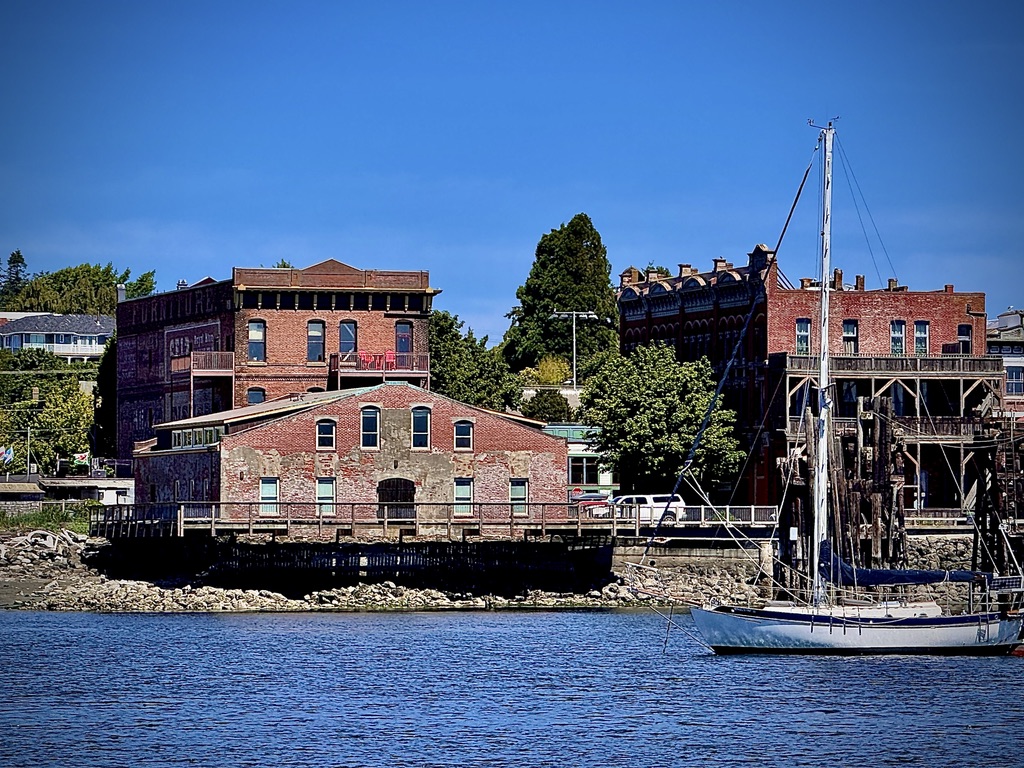
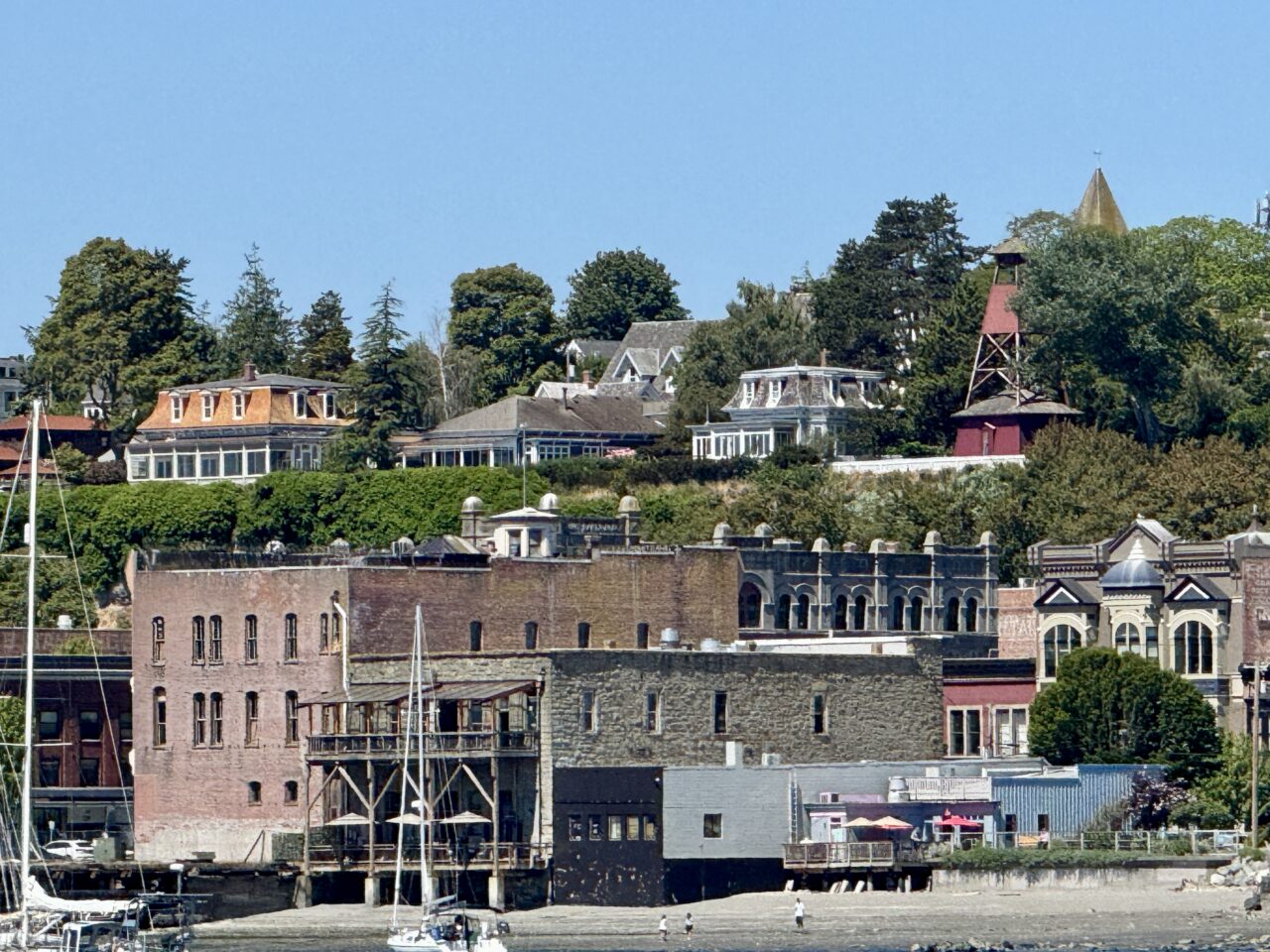
The commercial district along Water Street is one of the most intact Victorian commercial streetscapes in the American West — brick storefronts, ornate cornices, cast iron details, and continuous street-level retail that has never been interrupted by a parking lot or a box store. The entire downtown core is a National Historic Landmark District.
The residential Uptown district on the bluff above Water Street holds a concentration of Victorian domestic architecture that includes Queen Anne, Italianate, Eastlake, Stick, and Colonial Revival styles — captains’ homes, merchant houses, and professional residences built between roughly 1880 and 1900, many of them meticulously restored by a succession of passionate owners. The 1892 brick courthouse, Gothic Revival churches, and the Jefferson County Historical Society Museum occupy the same blocks.
Buying a historic home here is a different proposition from buying in any other Peninsula community. These properties carry the Federal Historic Tax Credit program as a potential benefit for qualifying renovation work. They also carry the maintenance and disclosure obligations of historic designation — buyers considering properties within either National Historic Landmark District should understand local guidelines around exterior alterations, which are enforced through both city code and national standards.
Not all Port Townsend real estate is Victorian. The market also includes contemporary waterfront construction, craftsman bungalows, acreage properties in the outlying Cape George area, and new-construction neighborhoods on the south end of town.
Neighborhoods
Downtown / Water Street Corridor
The working heart of the city — the historic commercial district, the waterfront, the marinas. Condominiums above storefronts, converted historic commercial buildings, and a handful of residential properties with direct water views. Walkable to everything. A distinctly urban Port Townsend experience, to the extent that’s possible in a town of 10,000.
Uptown
The bluff above Water Street, where the Victorian residential concentration is densest. Tree-lined streets, intact historic homes ranging from modest to grand, neighborhood coffee shops, the Saturday Farmers Market, and the quiet hum of community. Uptown is walkable to downtown via the iconic Tyler Street steps — a landmark in its own right. This is the neighborhood most buyers have in mind when they imagine “buying a Victorian in Port Townsend.” Restored Queen Annes and Italianates typically sell in the $600,000–$1.4 million range depending on size, condition, and lot.
Fort Worden Area
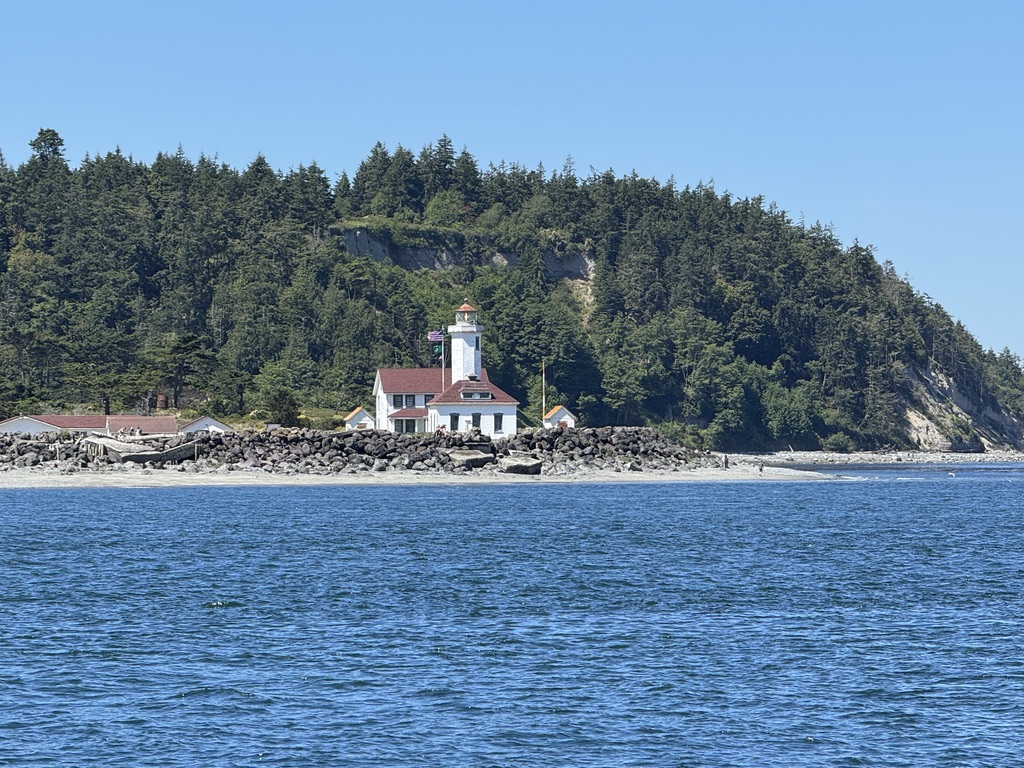
The north end of the peninsula, adjacent to Fort Worden State Park — a 434-acre former U.S. Army fort turned lifelong learning center and arts campus. Centrum, the internationally recognized arts organization, operates here, presenting world-class programs in jazz, blues, fiddle, dance, and writers’ conferences. Nearby residential properties tend toward contemporary construction with significant tree canopy and partial water views. Proximity to the park’s trails, beaches, and community programming makes this among the most sought-after residential positions in the city.
Point Hudson
The northernmost tip of the downtown waterfront — home to the Point Hudson Marina, the Northwest Maritime Center, and the site of the annual Wooden Boat Festival. A compact neighborhood with deep maritime character. Homes here are limited in number and rarely come to market.
Cape George
A rural residential area south of the city proper, characterized by larger lots, acreage properties, agricultural zoning in some parcels, and a quieter, more private character. Discovery Bay is nearby. Buyers seeking space, privacy, and proximity to Port Townsend without living in the dense historic core often focus here. Prices range widely based on acreage and water access.
Port Townsend South / New Construction
The southern end of the city has seen the most new residential development — neighborhoods like Madrona Ridge offer new construction with contemporary floor plans and wooded preserve views. More affordable entry point to Port Townsend ownership, without the maintenance complexity of historic stock.
Property Price Ranges
| Property Type | Price Range |
|---|---|
| Condominiums & smaller units | $450,000 – $650,000 |
| Craftsman & non-historic single-family | $550,000 – $850,000 |
| Restored Victorian (Uptown/Downtown) | $650,000 – $1.4 million |
| Waterfront with views, non-historic | $750,000 – $1.6 million |
| Grand historic estates, significant water views | $1.2 million – $2.5 million+ |
| Acreage / Cape George rural parcels | $400,000 – $1.4 million |
Figures reflect general 2024–2025 market conditions. The median sale price has held near $635,000–$651,000 range year-over-year. All values should be independently verified. Contact Jane for a current comparative market analysis.
What Buyers Should Know
Historic Property Disclosures & Obligations Buyers considering homes within either National Historic Landmark District should carefully review local design review guidelines before purchase. Exterior modifications to contributing historic structures are subject to city oversight. This is not necessarily a burden — the standards protect the very value that makes these properties desirable — but it is a material consideration for buyers who intend to modify, expand, or alter a historic home. A knowledgeable local agent is essential in navigating these disclosures.
Federal Historic Tax Credits Income-producing properties in historic districts may qualify for the Federal Historic Tax Credit (20% of qualifying rehabilitation expenditures). Buyers considering investment properties, B&Bs, or mixed-use buildings in the historic district should consult a tax professional to understand what may apply to their specific situation.
The Working Waterfront & Paper Mill Port Townsend is genuinely mixed-use in a way that purely residential communities are not. The paper mill, a 90-year operating industrial facility south of town, is part of the fabric and occasionally part of the sensory experience of living here. This is worth acknowledging honestly: Port Townsend’s authenticity and economic diversity come in part from the fact that it is not a theme park — it has a real industrial economy alongside its arts and tourism identity.
Ferry Dependency For buyers whose access to Seattle or other Puget Sound communities factors into their calculus, the ferry crossing at Keystone (Whidbey Island) and the Hood Canal Bridge are the two primary routes. Both are reliable, and both add time. The ferry is scenic and practical; the bridge occasionally closes in high winds. Buyers who commute with regularity should model their real commute before purchasing.
New Construction vs. Historic Stock The two sub-markets behave differently. Historic Victorian properties are relatively illiquid — they attract a specific buyer, and pricing must reflect condition, restoration quality, and the appetite of that buyer pool. New construction in Port Townsend South and Madrona Ridge trades more like a conventional residential market. Understanding which sub-market a given property belongs to is material to pricing and transaction expectations.
The Maritime Economy
Port Townsend’s working waterfront is not decorative — it is a serious, functioning maritime economy, and that is a significant part of what makes the community feel authentic in a way that purely residential resort towns do not.
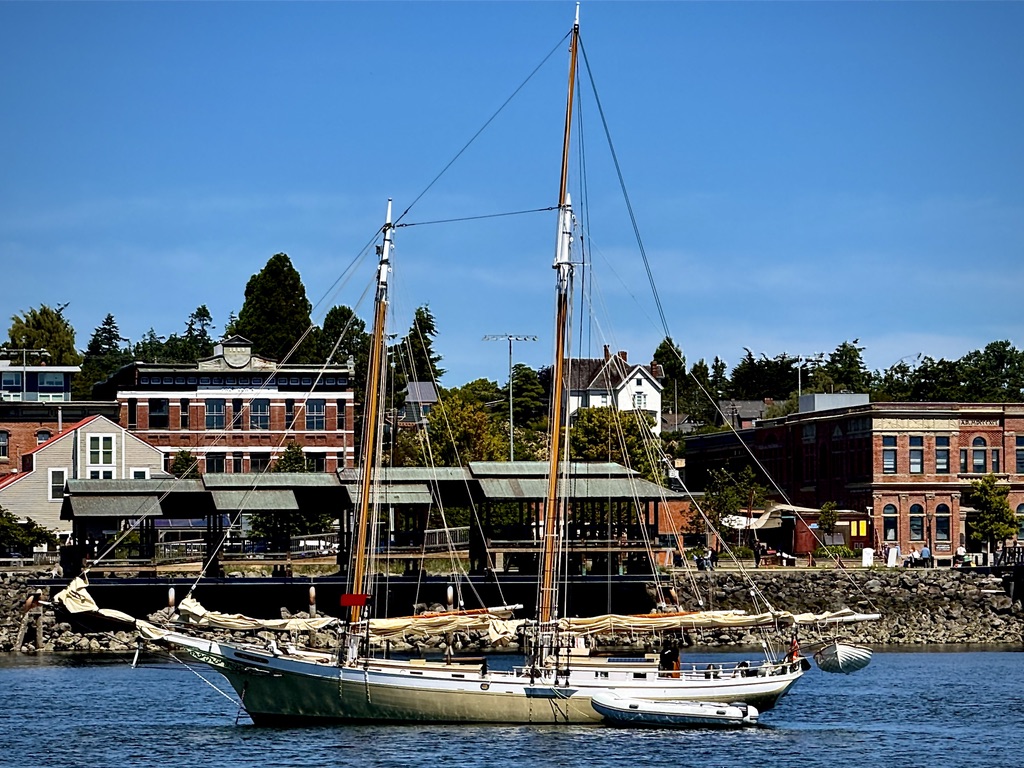
Two marinas bracket the downtown waterfront. Boat Haven Marina, operated by the Port of Port Townsend, is home to the Port Townsend Boatyard — the only boatyard openly accessible to the public in Washington State — featuring a 330-ton Marine Travelift and a marine trades industrial complex that keeps the yard perpetually active with vessels of every description. Point Hudson Marina, at the north end, accommodates transient vessels, marine-oriented businesses, and the Northwest Maritime Center.
The Port Townsend Paper Company mill, operating continuously for more than 90 years, remains Jefferson County’s single largest private employer. The maritime trades complex — boatbuilders, riggers, marine electricians, diesel mechanics, canvas makers, fiberglass workers — employs hundreds more and draws vessels from across the Pacific Northwest for haulout and refit. This is meaningful context for buyers: Port Townsend has a real blue-collar economic foundation beneath its arts-and-architecture identity, and that diversity gives the community a stability and groundedness that is less common in resort-exclusive markets.
Arts & Culture
Port Townsend has more artists, designers, and media workers than 90% of American communities its size, and the cultural infrastructure to match.
Centrum at Fort Worden is the city’s most internationally recognized arts organization — a presenter and residency program that brings world-class artists in jazz, blues, traditional fiddle, dance, and literary arts to the peninsula each summer, culminating in public festivals that draw audiences from across the region. The Port Townsend Jazz Festival and Festival of American Fiddle Tunes are among the most respected events of their kind in the Pacific Northwest.
The Wooden Boat Festival, held each September at Point Hudson, is the largest gathering of traditional wooden boats in the Western Hemisphere — drawing over 200 classic vessels, boatbuilding workshops, maritime vendors, and thousands of visitors to the waterfront for three days.
The Port Townsend Film Festival, held each fall, screens over 90 films in the walkable National Historic District — a carefully curated independent cinema event with a strong local following.
The Port Townsend School of Woodworking, Northwind Art, Key City Public Theatre, the monthly Art Walk (first Saturday of every month, venues open until 8 p.m.), and over two dozen working galleries and studios concentrated along Water Street and in Uptown collectively constitute a creative life that is genuinely woven into the fabric of daily living here.
In 2020, Port Townsend was formally designated a Washington State Creative District by the Washington State Arts Commission, encompassing the downtown and uptown historic districts and the Fort Worden campus — the culmination of a recognition process that codified what residents had experienced for decades.
Schools & Healthcare
Port Townsend is served by the Port Townsend School District, which operates a full PreK–12 system within the city. Schools receive above-average ratings and are known for their integration of arts into the curriculum — a natural reflection of the community’s character. Peninsula College offers community college access in nearby Port Angeles.
Jefferson Healthcare operates the primary acute care hospital in Jefferson County, located in Port Townsend — a distinct advantage for residents of the northern Olympic Peninsula compared to communities that rely on more distant facilities. Primary care clinics, specialty practices, and a growing telehealth infrastructure serve the broader Jefferson County population.
Market Snapshot
Port Townsend is a low-to-moderate inventory market with relatively stable, slow-appreciation pricing. The median home value has held near $635,000–$651,000 through 2024–2025, with annual appreciation in the 2% range — modest compared to the broader Pacific Northwest run-up of the prior decade, but consistent with a market driven by lifestyle demand rather than speculative pressure.
Approximately 270 residential properties sold in the trailing twelve months (through late 2025), with a median days-on-market of 83. The market is broadly buyer-friendly in terms of pace compared to the urban Puget Sound, while waterfront and historic Uptown properties with strong condition and provenance continue to command premium pricing and shorter marketing times.